

On Thursday, 24 April 2025, the staff of the Arrupe Centre for Research and Training (CARF) carried out a field mission to the villages of Amato, Abelo and David, located about 45 km from the town of Lubumbashi, on the Lubumbashi-Kasomeno road, in the province of Haut Katanga. This mission was part of the « Resilience and sustainable livelihoods project in Congo: farmers for inclusive and cooperative rural development »financed by Navarra and Alboanand implemented by CARF.
Since 2020, CARF has been supporting local communities surrounding mining sites, which include the most vulnerable households in the area. These people, often facing socio-economic and environmental challenges, are receiving ongoing support to improve their resilience and financial autonomy. This project places particular emphasis on agriculture, as the main means of generating sustainable income, by promoting innovative and inclusive techniques.
The main objective is to transform the agricultural practices of beneficiaries by improving their productivity and their ability to generate income. In order to achieve this goal, households are organized in associations, which aim to move towards Structured cooperativesthereby promoting collective and sustainable development.
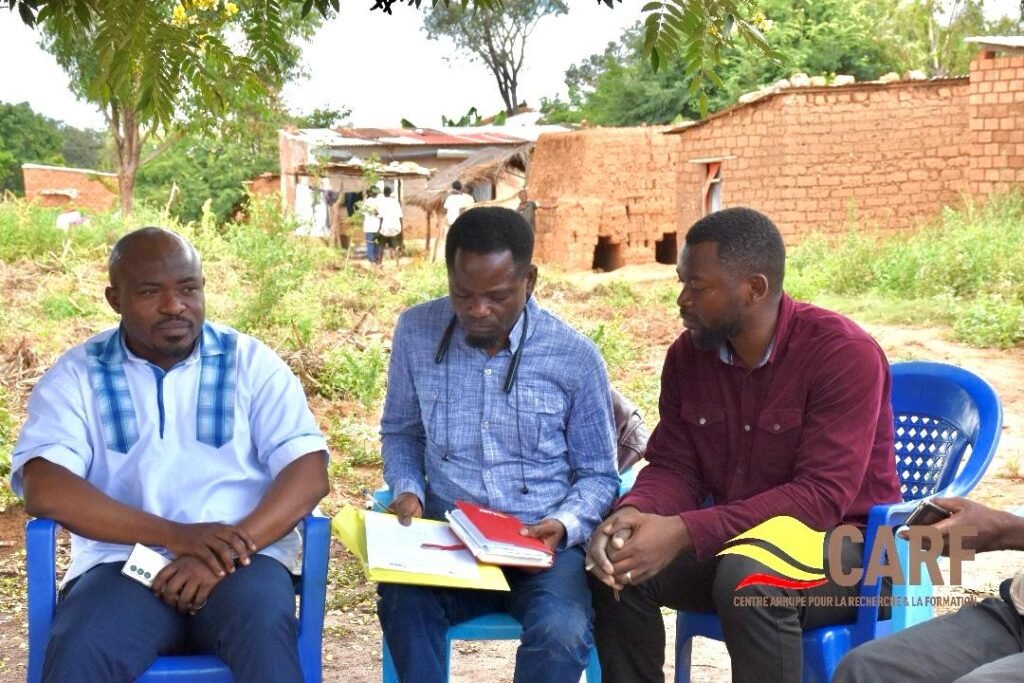
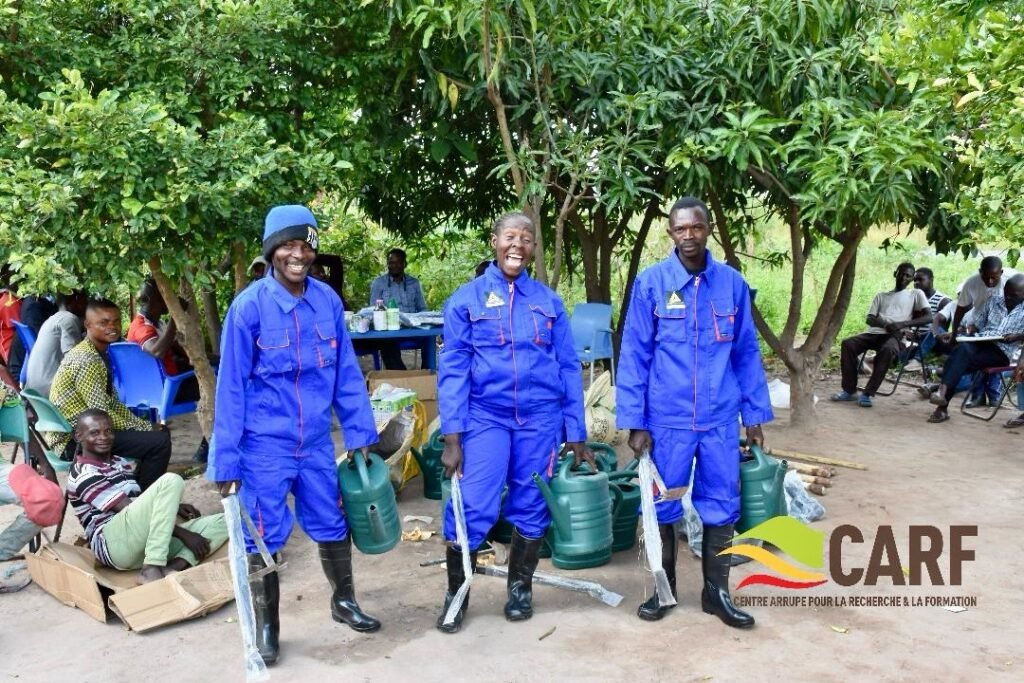
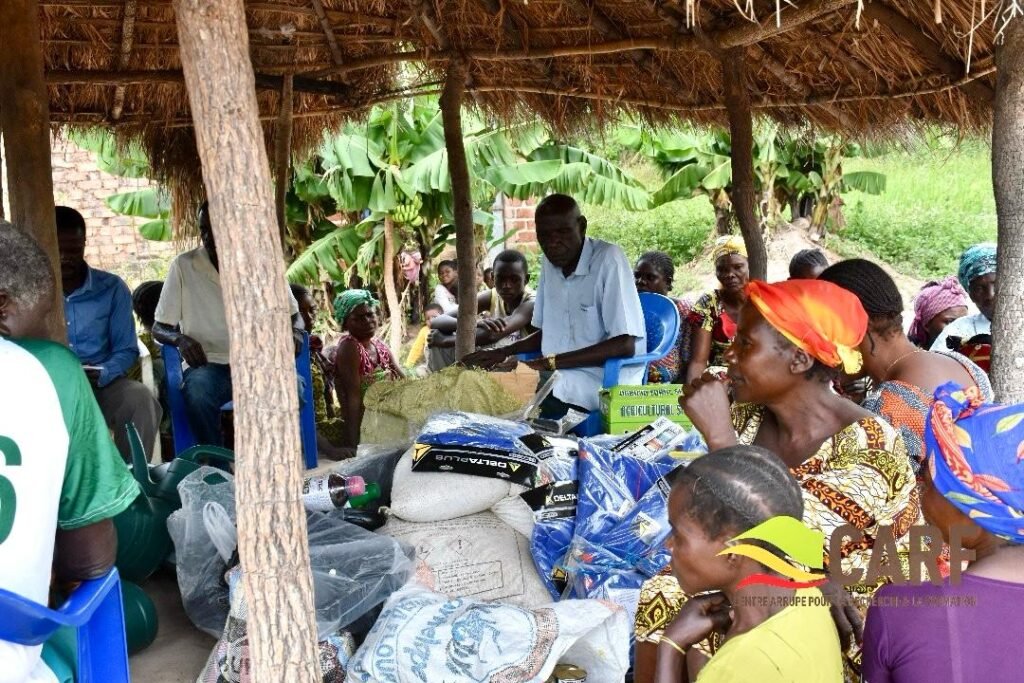
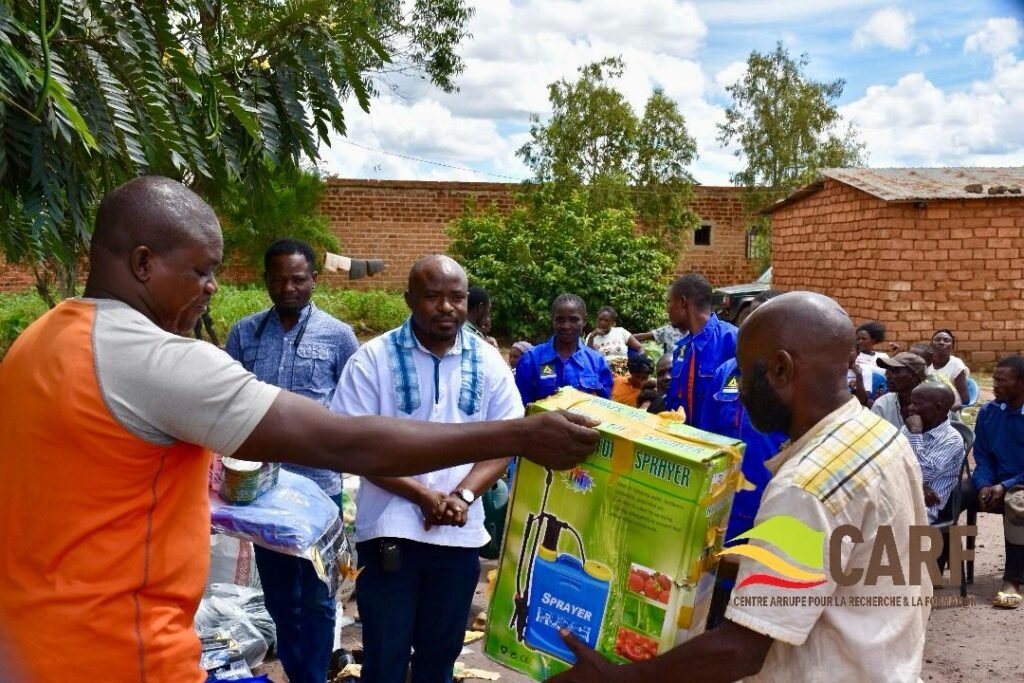
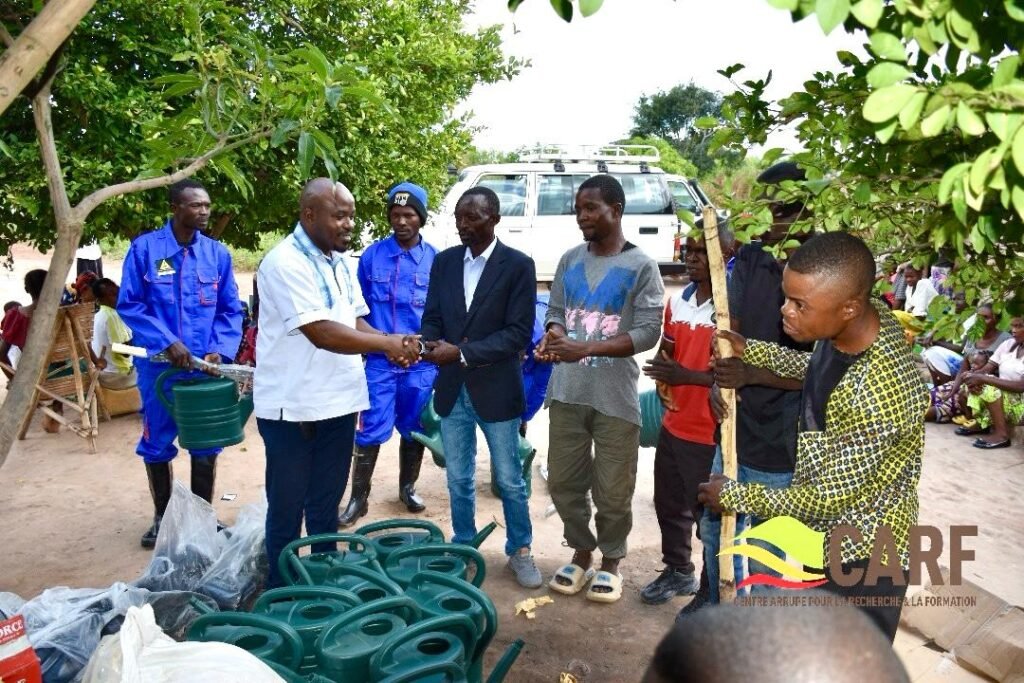
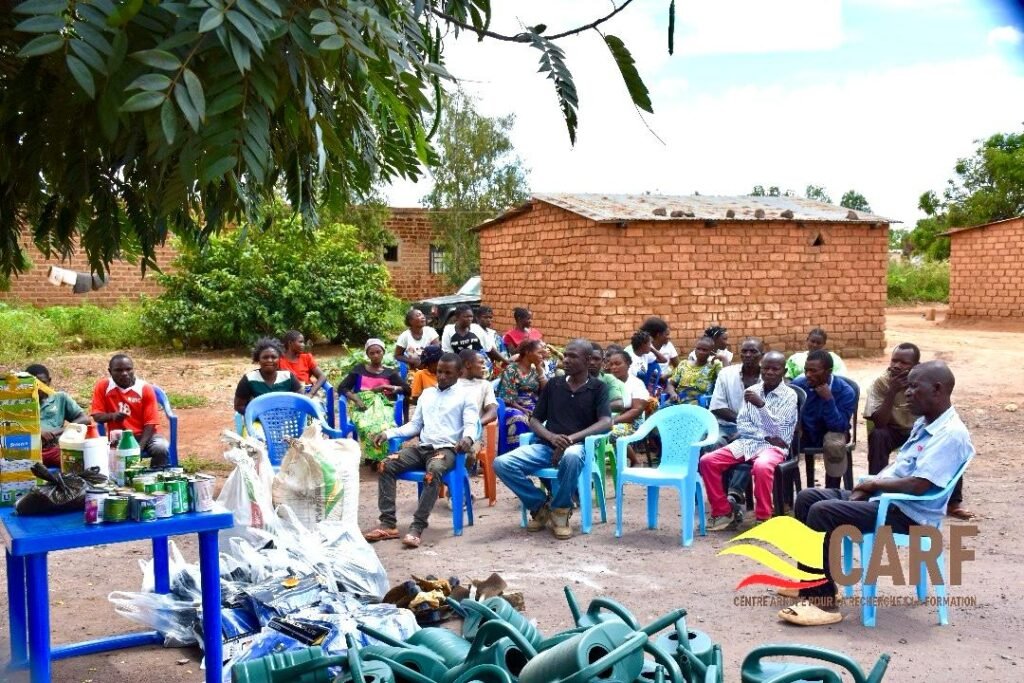
Indeed, the descent on the ground involved close coordination between CARF, local authorities and community leaders. The mission was led by Father Michael Bushiri, SJ, Chief Financial Officer, accompanied by Messrs Adrien Lenge, Project manager, Isaac Kitungwa, Logistician, and Elie E. Bokele, Senior Assistant. In the following, the Project manager recalled the stakes of this initiative and provided technical advice to the participants; and the Financial Director, on behalf of CARF, officially handed over the materials to the Village Chiefs, in the presence of the community leaders and beneficiary households gathered in associations.
Agricultural and non-agricultural materials distributed to beneficiary associations are essential elements for supporting vegetable production, capacity building and ensuring food and economic independence for these communities. The equipment provided includes:
- Non-agricultural materials: working suits, suits and boots, etc.;
- Agricultural tools: hoes, cutters, sprinklers, etc.;
- Agricultural inputs: various seeds (tomatoes, onions, peppers, cucumbers, gombos, white eggplants, etc.) and plant protection products.
This stage of distribution marks the beginning of a series of activities planned to continue the implementation of the project. These next steps include:
Technical and practical training :
- Agroecological production techniques;
- Establishment and management of Community savings banks;
- Creation and management of income-generating activities (AGR);
- Crop management and conservation;
- Individual and collective empowerment;
- Gender;
- Women leadership and social participation;
- Gender equity;
- Networking and building strategic partnerships, etc.
Technical advice and monitoring The CARF staff will accompany the associations through regular visits, providing technical support and personalized follow-up to achieve the project objectives.
The initiative aims to transform these communities into key players in inclusive rural development. The introduction of sustainable agricultural practices, combined with the structuring of cooperatives, will significantly improve the living conditions of beneficiary households, while promoting better management of local resources. This field mission illustrates CARF's commitment to sustainable development and the resilience of rural communities. Working hand in hand with local people, this project helps lay the foundations for a better future for the villages of Amato, Abelo and David.
Elie E. Bokele, Executive Assistant


