
Our publications
SUMMARY REPORT: Data analysis of the digital alert mechanismmines for the promotion of human rights and good practices in the sites of Lubumbashi, Lwisha, Fungurume and Kolwezi ».
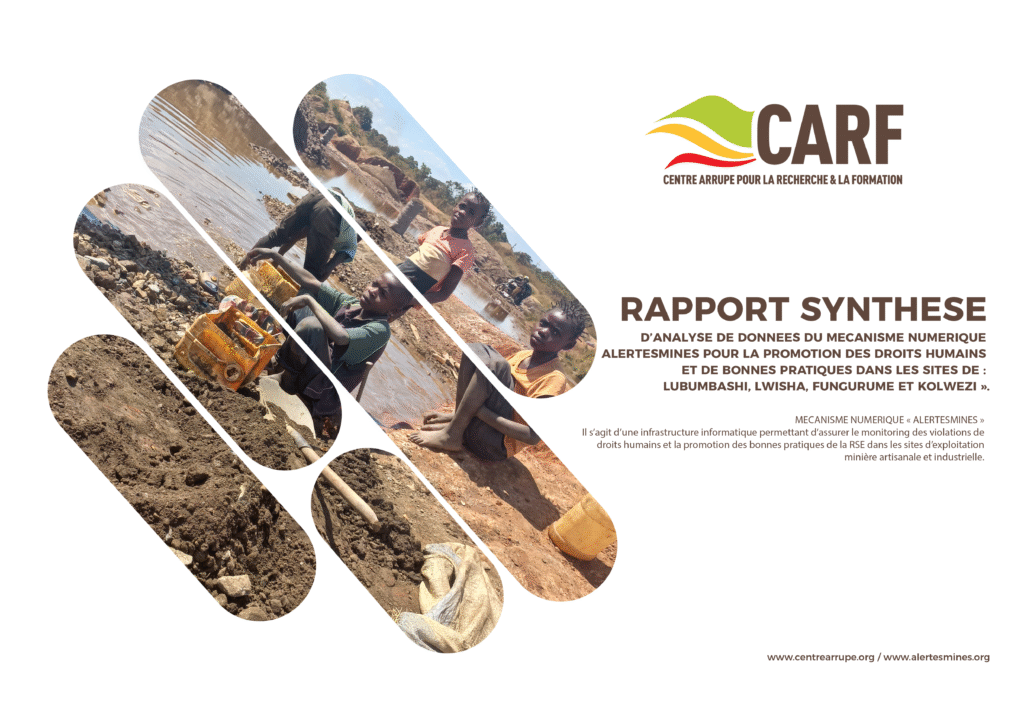
The Democratic Republic of the Congo is a country potentially rich in natural resources, especially raw materials, mainly in its southern part. The exploitation of these resources contributes significantly to the national budget and to the improvement of the country's gross domestic product, thus contributing to the country's development. This situation should improve the living conditions of the riparian communities living around the various industrial and artisanal mining sites of these minerals under national and international regulations.
The CARF's early warning mechanism in areas with a high concentration of mining activities, namely: LUBUMBASHI, LWISHA, FUNGURUME and KOLWEZI, has enabled the various members of the mining chain to have a panoramic view of these activities in view of many cases of human rights violations and the daily lives of registered coastal communities. This mechanism reviews both good practices and violations of environmental and human rights so as to establish responsibilities of all stakeholders in mining.
MINIER 2018 CODE EXPLIQUE : Synthesis for the use of cooperatives
Through this booklet, the key aspects of the synthesis of the Congolese mining code, of all those involved in mining, of artisanal mining operators, of the populations bordering mining companies, of civil society actors, of specialists in the supervision of local communities and of human rights and environmental defenders, constitute an important light for a good knowledge of mining law.
This document is intended to be a tool for raising awareness, advocacy or lobbying for the well-being of communities living around large mining projects but generally not benefiting from the exploitation of their land wealth.
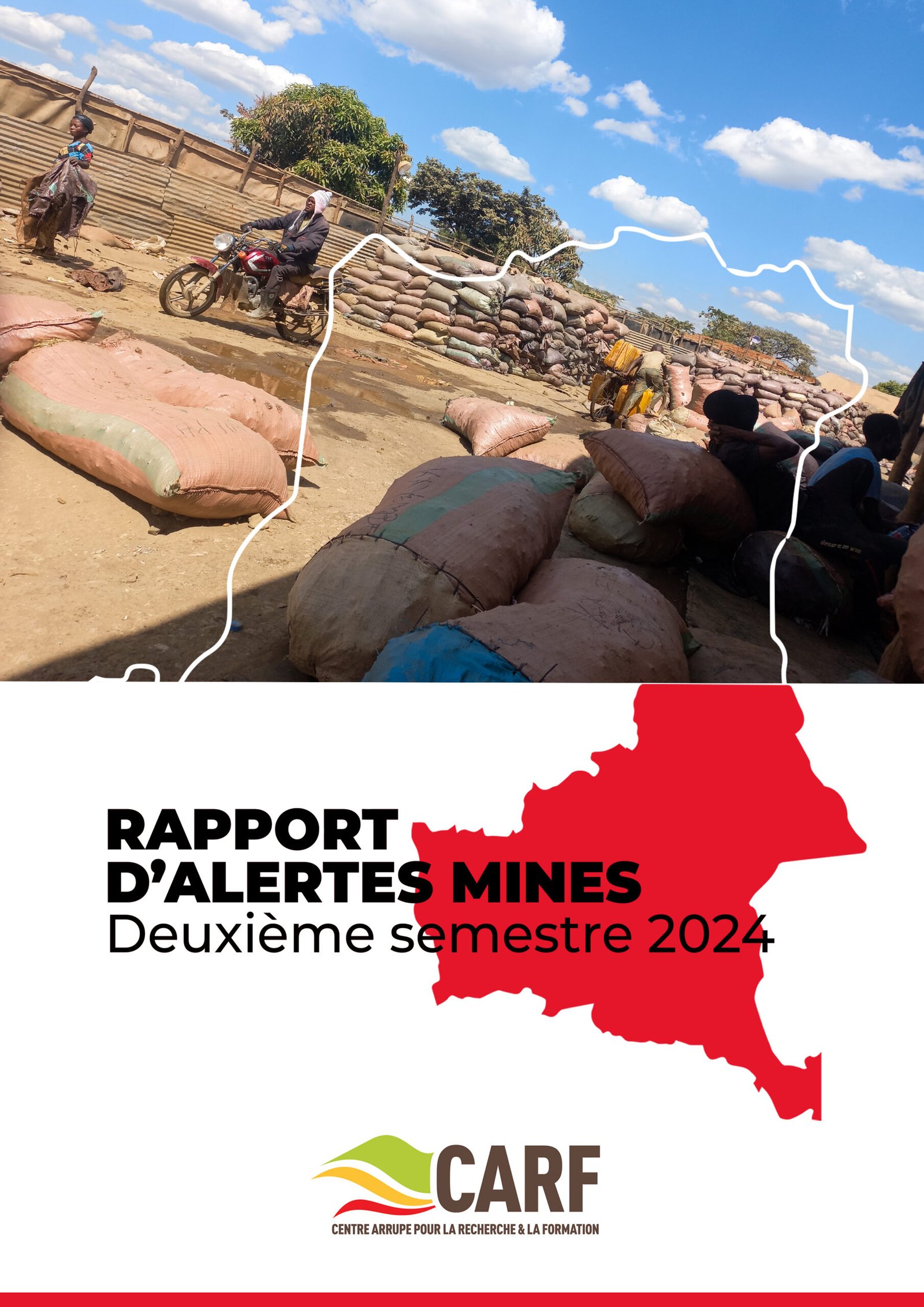
Mine Alert Report: 2nd half 2024
This report highlights the critical issues related to mining in the DRC, highlighting the environmental and social consequences for local communities. The Mechanism AlertsMines plays a crucial role in enhancing the voice of affected populations. Action is urgently needed to ensure more equitable and sustainable exploitation.
Analysis of the warnings collected between June and December 2024 shows that mining in the DRC remains marked by social tensions, environmental degradation, and shortcomings in societal responsibility. The Fungurume, Kolwezi, Lubumbashi and Lwisha sites focus on many of the identified issues.
Guide-synthesis
This guide is intended for local communities, civil society organizations and mining companies involved in the management of funds derived from the allocation of 0.3% of turnover, specifications and mining fees.
It also addresses the political and administrative authorities responsible for accompanying communities and businesses in the implementation and monitoring of these funds in order to ensure transparent and effective management.
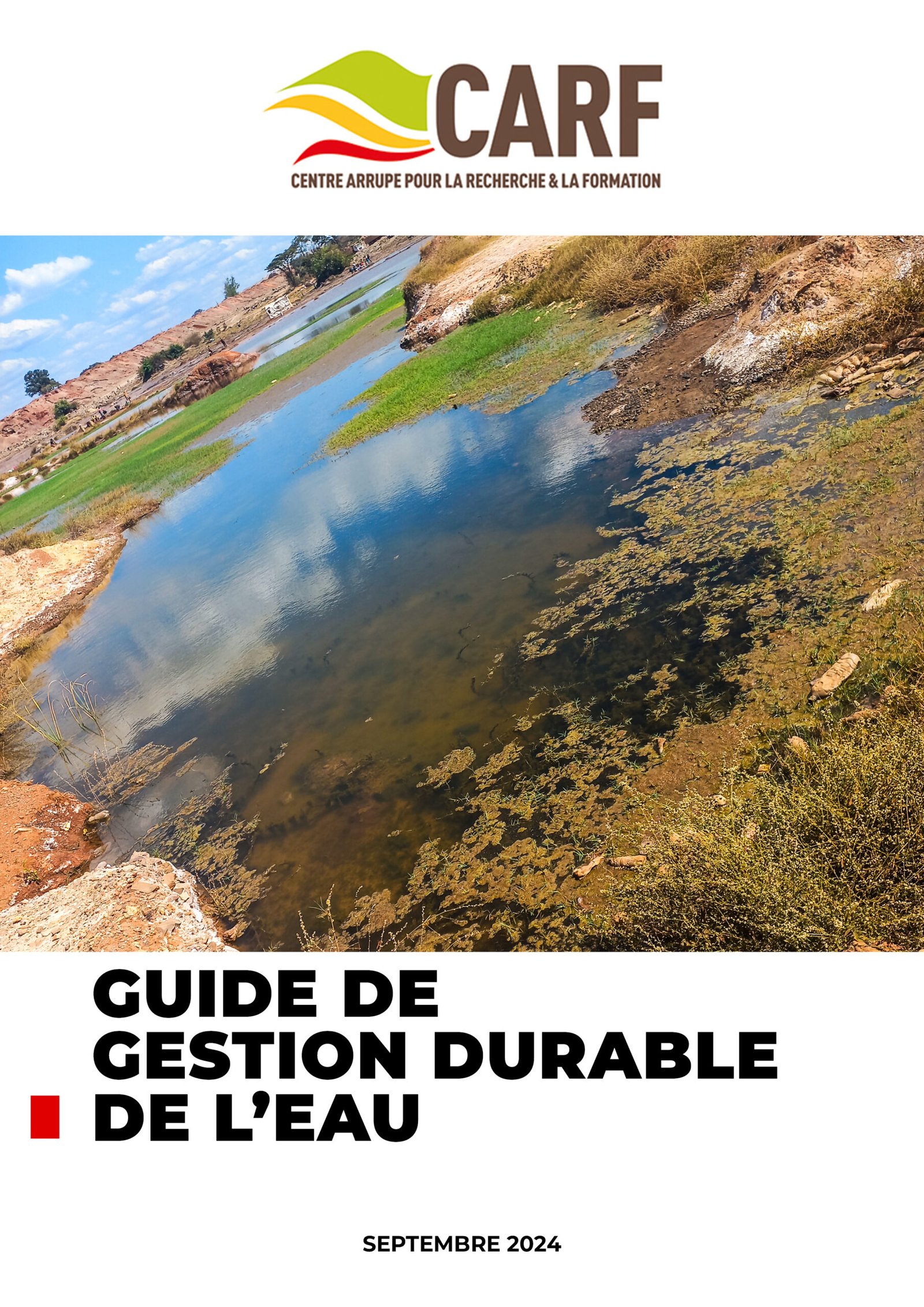
Sustainable Water Management Guide
In R.D. Congo, particularly in its southern part, which is a mining part, communities are faced with water shortages, which are a puzzle that is not a problem.
does not allow these communities to carry out their activities properly, particularly agricultural activities.
This guide is intended to be a basic tool and self-training that provides technical information that is popularized and illustrated and made available to local communities to enable final access to promote sustainable water management in their different cultures.
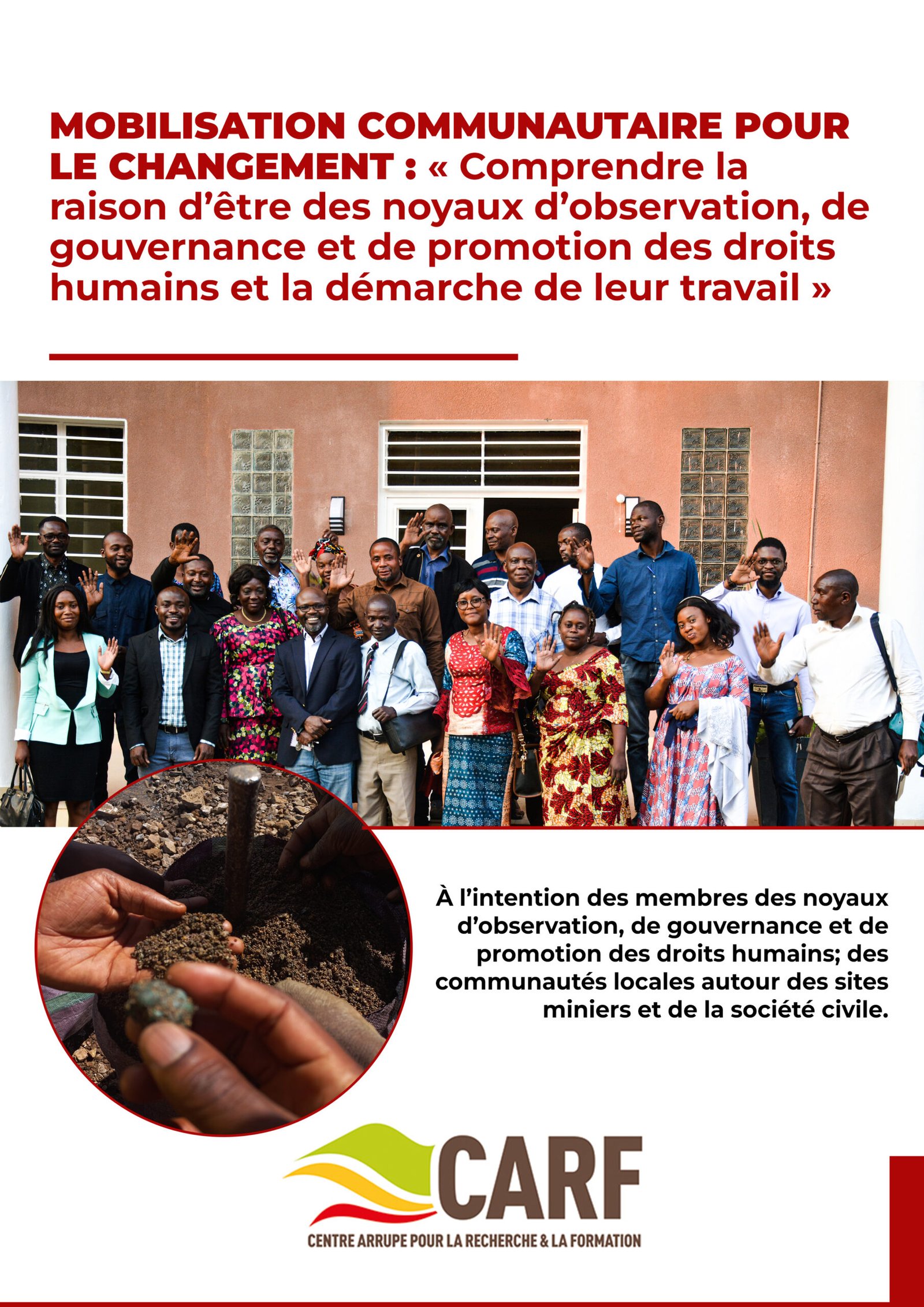
Community engagement for change
The Democratic Republic of the Congo promulgated the revised Mining Code on 9 March 2018 and its mining regulations on 8 June.
This new legislative framework is the result of a lengthy process of multi-stakeholder exchange. Civil society, for its part, had mainly contributed to issues relating to community development directly affected by mining projects, as well as to human rights.
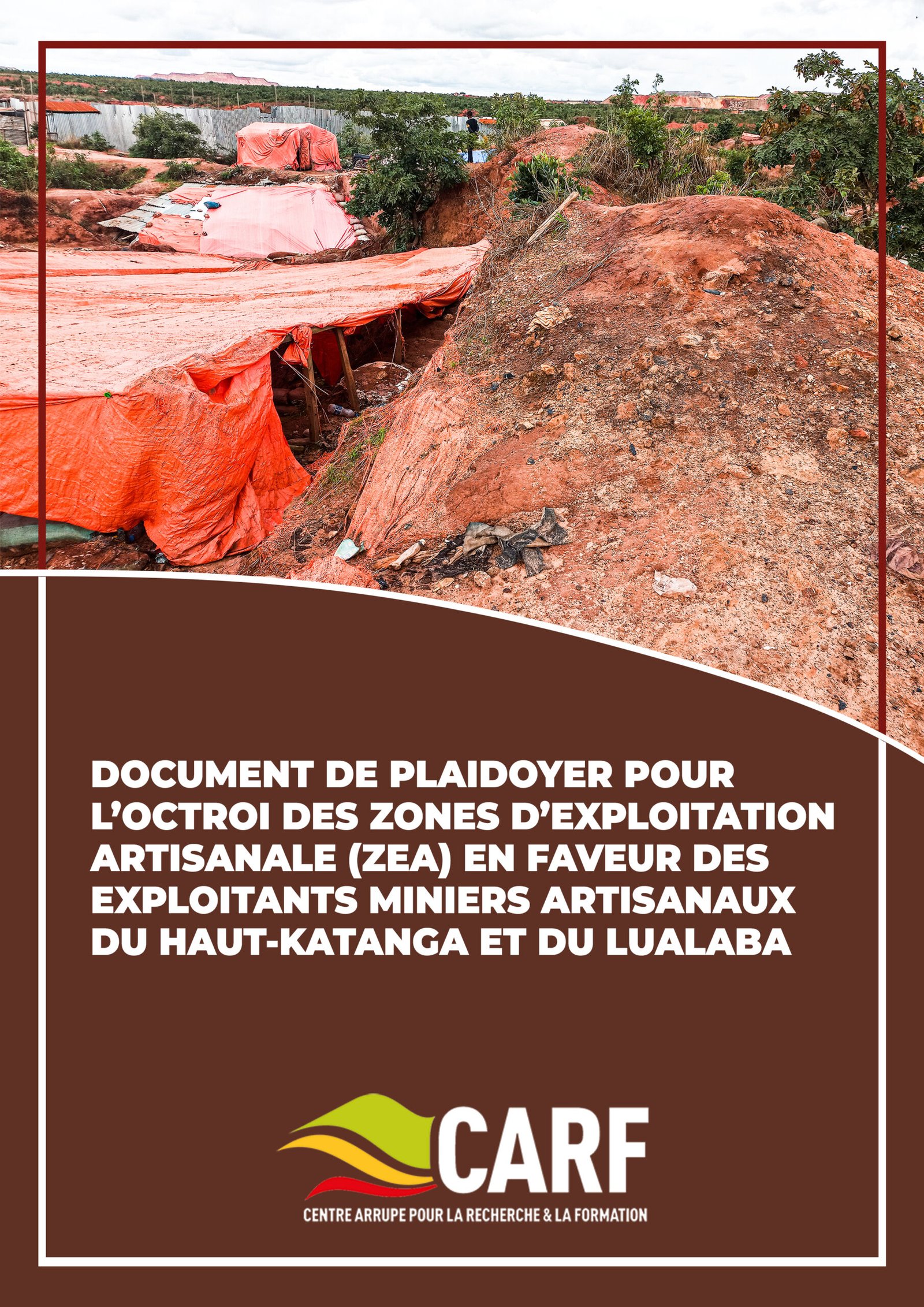
Advocacy strategy paper for granting EAAs to mining operators
Artisans of Upper Katanga and
Lualaba
In collaboration with MISEREOR, CARF addressed these challenges, which are of common interest to ensure fair development conditions for artisanal miners. This document provides a basis for advocacy for the granting of artisanal exploitation zones to artisanal farmers.
FINAL NARRATIVE REPORT
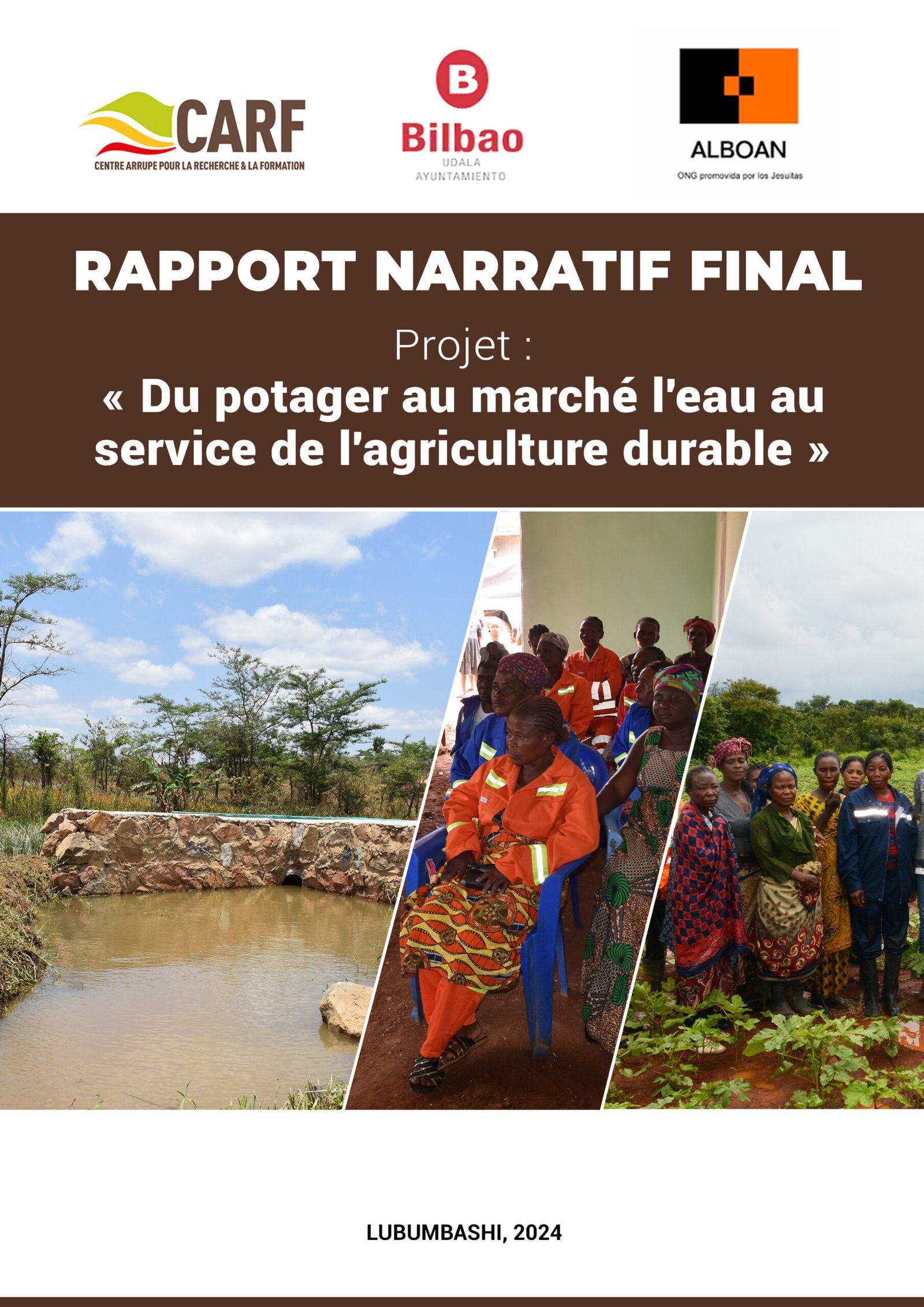
Project: « From the vegetable garden to the water market to
sustainable agriculture »
Specific objective: Improve access to safe drinking water by strengthening production capacity, autonomy and leadership of women farmers.
The project involved construction of water sources for the supply of water to populations in the Lwisha belt. Its overall objective was to contribute to the
ensuring the human right to water to enable women farmers in Upper Katanga, DRC, to access sustainable livelihoods.

