
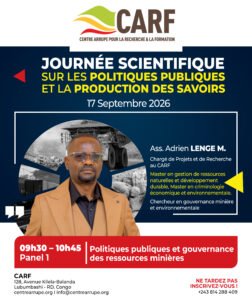
Priority 1 Public policies and governance of mineral resources
– Practices in the marketing of minerals from artisanal mining;
– Actors of the mineral marketing chain;
Relationship of powers, interaction between actors and sharing of added value;
– Issues and logic around the marketing of minerals;
– A path of improvement for a preventive governance of economic crime upstream of the supply chain of artisanal minerals (Based on the case of Luisha and other local experiences of Upper Katanga).
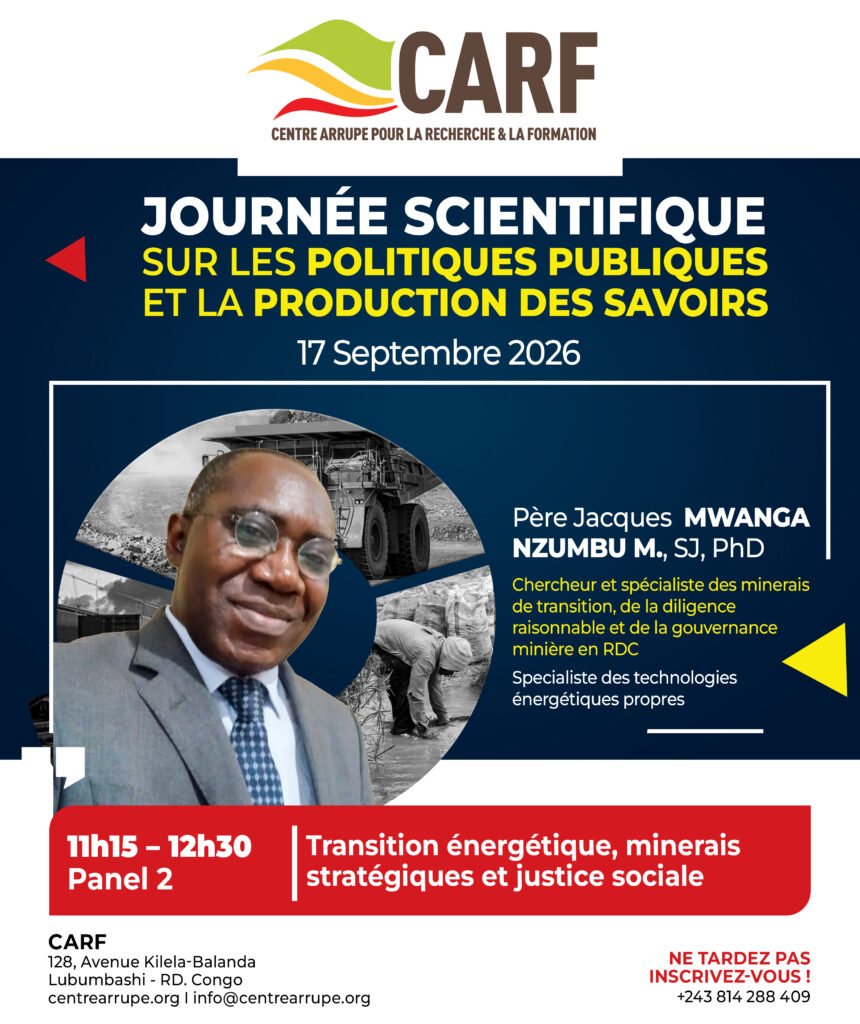
Axis 2 Energy transition, strategic minerals and social justice
– Copper, cobalt and other critical minerals in battery value chains and clean technologies.
– Challenges of the decarbonization of the mining sector.
– Fair energy transition, trade-offs and inequalities between producer and consumer countries.
– Mining sovereignty, economic dependence and international cooperation.
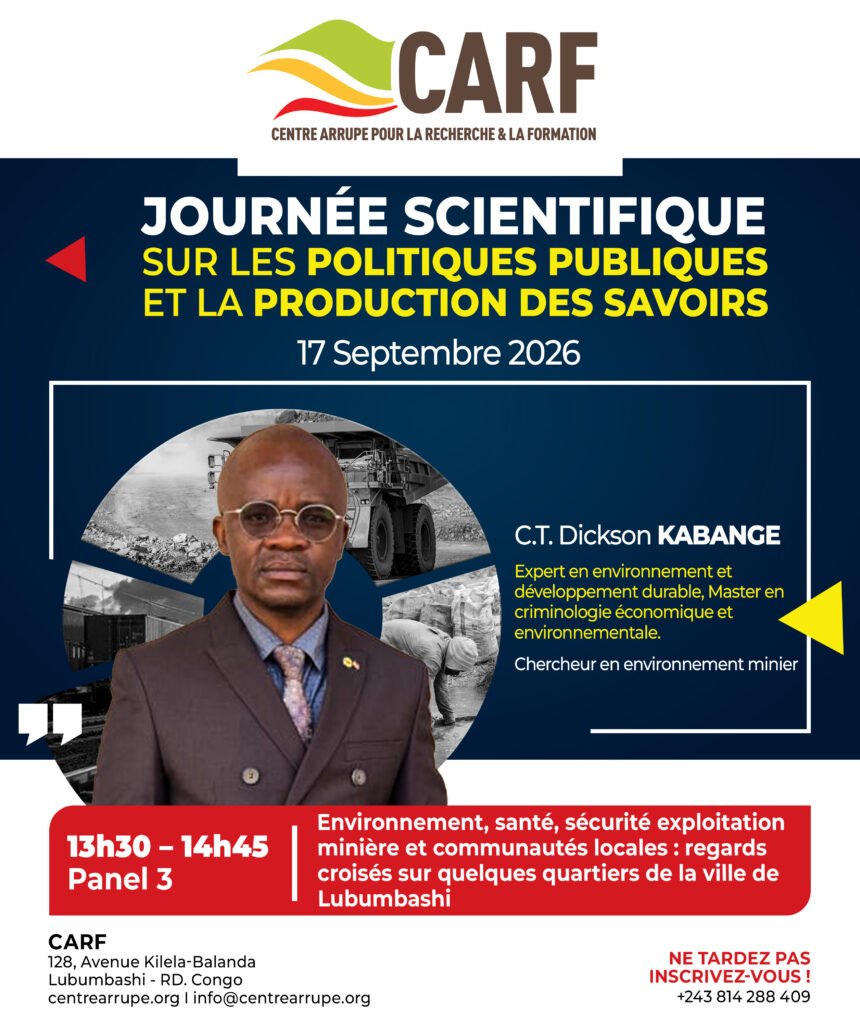
Axis 3 Environment, health, safety mining and local communities: looking at a few neighbourhoods in Lubumbashi
– Environment and mining: differences between normative assignments and operational actions;
– Environmental and social impact assessments: limitations and possible improvements;
– Role of actors in the protection of the mining environment;
– Energy transition, global demand for practical minerals around environmental protection.
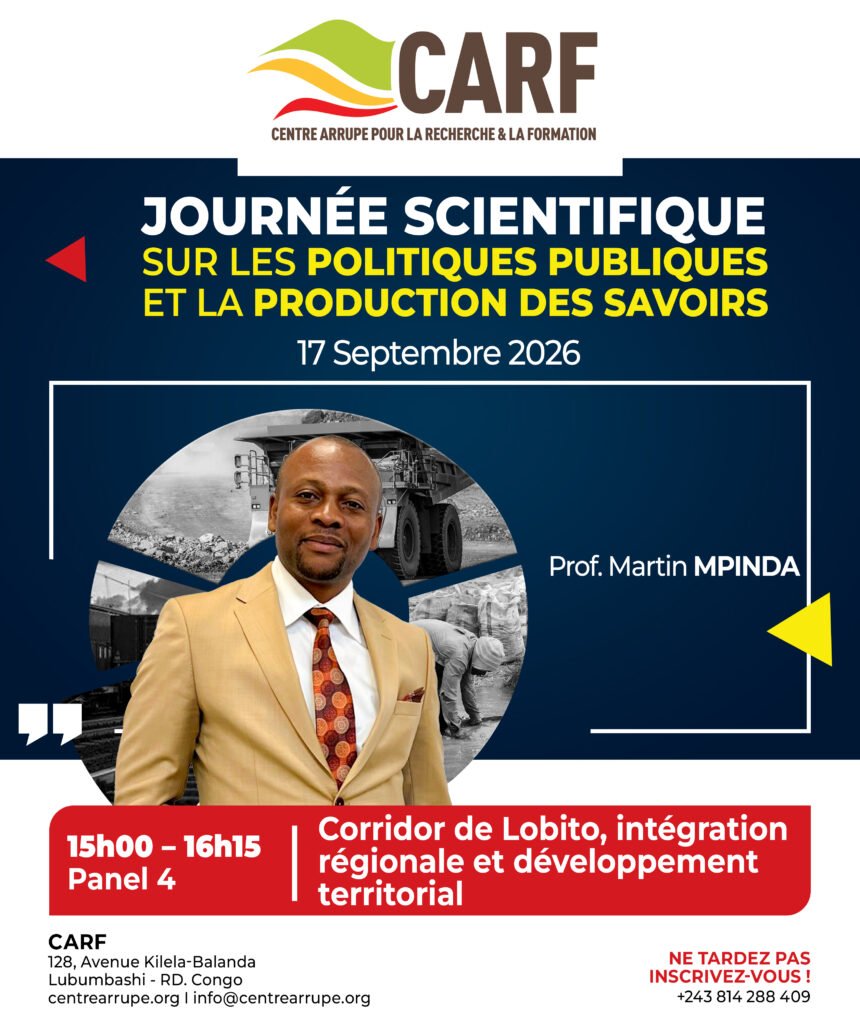
Axis 4 The Lobito Corridor: Regional Integration and Territorial Development
– Transport corridor or development corridor?
– Logistics, commercial and industrial issues for the DRC.
Opportunities for economic diversification, employment and transformation of communities around the corridor.
– Cross-border governance, social and environmental standards, inclusion of women, and young people.
– Place of Congolese research and expertise in the design, monitoring and evaluation of the corridor process.
The day will adopt a participatory, interdisciplinary and proposal-oriented approach.
It will include:
- An inaugural conference.
- Four thematic panels.
- Presentations of research and case studies.
- A round table of public decision makers, researchers, business, civil society and community representatives.
- Exchanges with participants.
- A final summary session and adoption of recommendations.
Interventions should focus on a clear articulation between research results, field experience and concrete public policy proposals.


